
Long-stroke strain measurement
High Elongation Extensometer
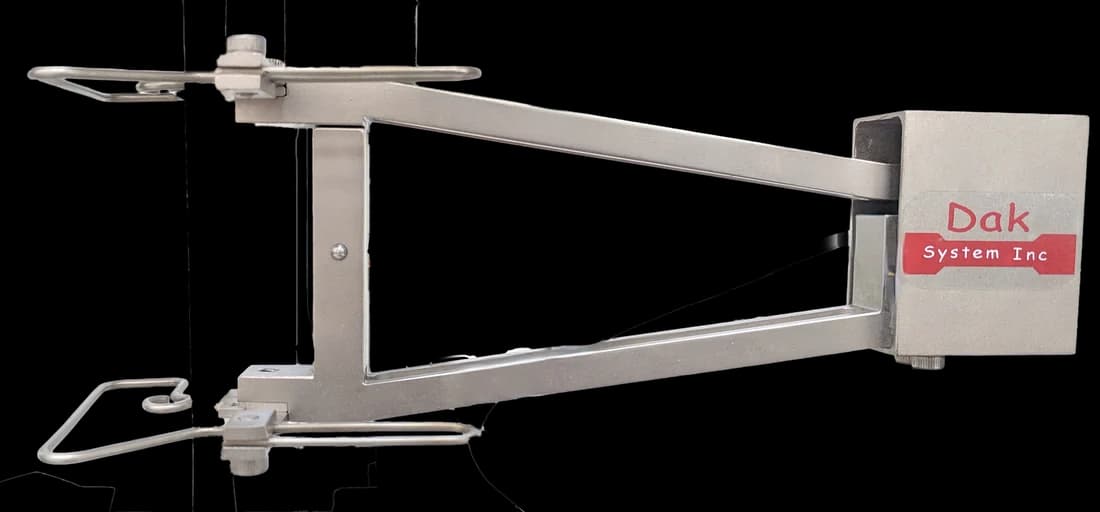
Gripper arms release at break, protecting the sensor from elastomer wrap.
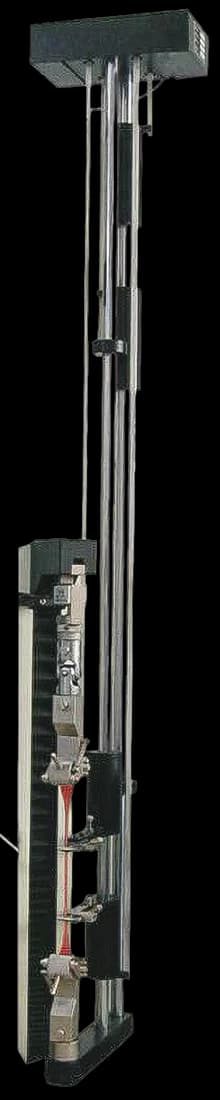
An 800 mm long-stroke gauge for plastics, rubbers, elastomers, cellular plastics, thin sheeting and films — anything that stretches a long way before it fails, at maximum forces above roughly 20 N.
Built around the measurement
What the datasheet says about the long stroke, and why each part of it matters to a result.
Stroke that keeps up with the specimen
A rubber or elastomer dumb-bell can run to several times its gauge length before it breaks. A gauge that stops short of that stops recording exactly where the interesting part of the curve begins, which is why the travel here is 800 mm.
Releasing at break
The gripper arms are designed to let the specimen go at the moment of failure. Rubbers and elastomers tend to snap back and wrap around the sensor arms, and an instrument that holds on through that is an instrument being damaged by every test it completes.
Key features
- Travel range of 800 mm
- Gripper arms release the specimen at break
- For maximum forces higher than approximately 20 N
- Suited to polymers, rubbers, plastics and cellular plastics
- Thin sheeting and film
The published figures
- Travel range
- 800 mm
- Gauge length
- Adjustable, 15 to 50 mm
- Resolution
- 0.01 mm (10 microns)
- Minimum maximum force
- Approximately 20 N
The other extensometers
Strain measured a different way, for a different specimen.