
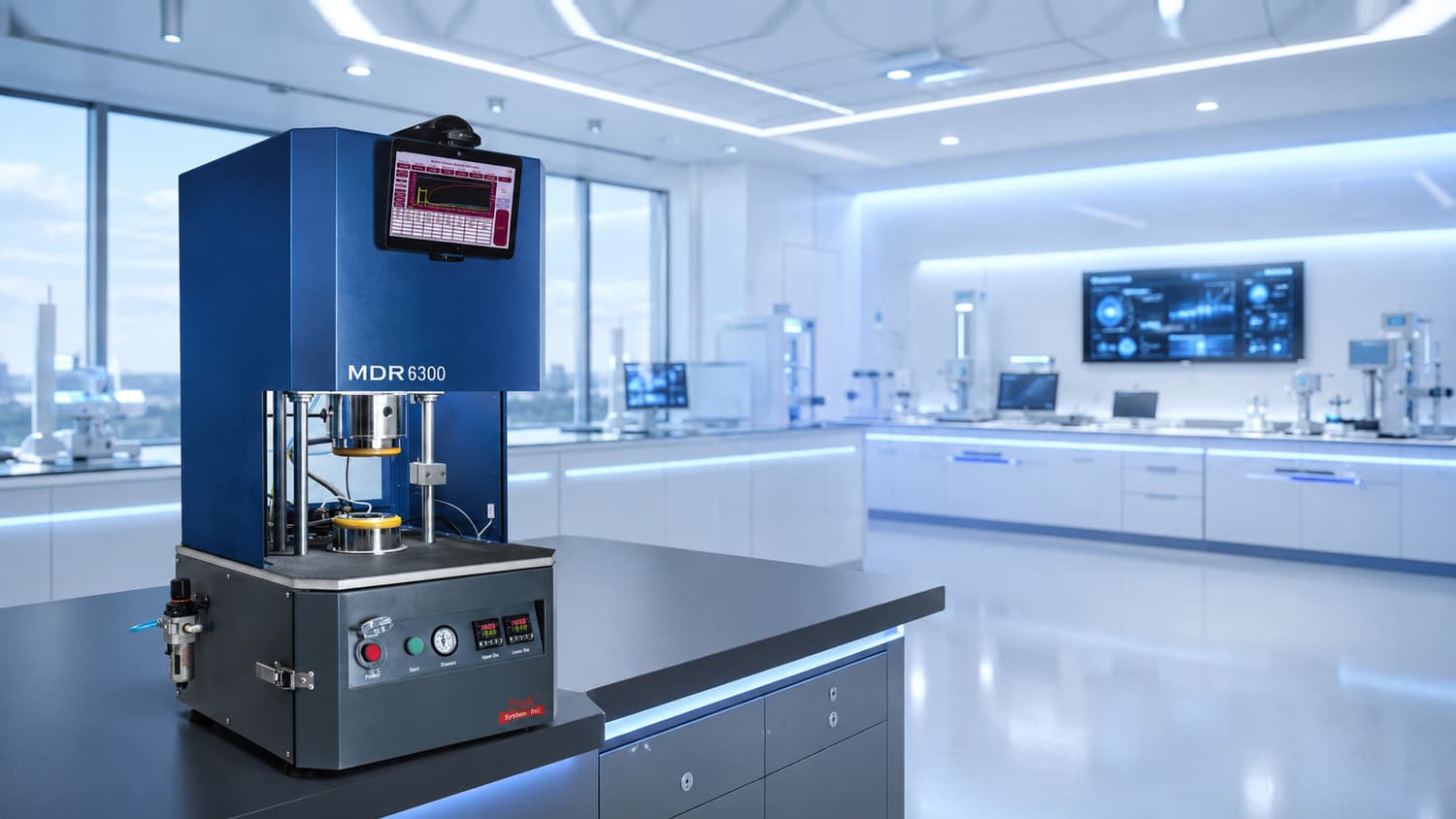
MDR
Rheology
A state-of-the-art rotorless curemeter engineered to measure the cure profile of rubber compounds at constant strain and frequency. Designed for high-throughput laboratories requiring absolute precision, unparalleled repeatability, and unwavering data integrity across continuous testing cycles.
- Torque
- upto20 N·m
- Temperature
- upto230 °C
Engineered to a measurable standard.
- Torque range
- upto 20 N·m
- Torque transducer
- High stiffness
- Torque units
- dN·m, lbf·in, kgf·cm or N·m
- Oscillation amplitude
- ±0.5°, 1.0°, 2.0°, 3.0° arc standard
- Oscillation amplitude (optional)
- ±0.1°, 0.2°, 0.3°, 5.0° arc
- Oscillation frequency
- 1.667 Hz (100 cpm), fixed
- Drive
- Direct drive motor, middle inertia
Engineered for Unwavering Repeatability.
Constructed with a highly rigid four-post frame to eliminate deflection, paired with a precision-sealed cavity that guarantees identical testing conditions from the first cycle to the last.
Direct drive
A direct drive motor applies precise oscillation with Dyna Pro software control, eliminating the need for mechanical spacers or routine re-calibration.
Live cure curve
Elastic torque, viscous torque and tan δ are all drawn live on one graph as the test runs, not reconstructed afterwards.
Rotorless cavity
Optimised thermal recovery. The absence of a rotor ensures dies return to the set temperature significantly faster after loading compared to traditional oscillating disc rheometers.
Sealed under pneumatic load
High-pressure pneumatic seals ensure acute die alignment, firmly securing the cavity on every load to prevent compound extrusion and maintain exact volume.
Isothermal and non-isothermal
Upper and lower dies are controlled separately, so the cavity can hold an isotherm or follow a programmed ramp. Non-isothermal cure needs the cooling option.
Grooved biconical dies
Cruciform-less dies featuring optimised groove profiles strictly minimise slippage on stiffer stocks, ensuring torque readings reflect pure material properties.
Every cure parameter
ML, MH, MH−ML, scorch time, maximum cure rate and the time it occurs all come off one run, alongside more than a hundred other process parameters.
Engineered for Minimal Downtime.
Designed with user-replaceable seals and straightforward calibration protocols, empowering your facility's technicians to maintain peak operational efficiency without requiring idle time for external service visits.
MDR in action
See how it runs — a sealed cavity, a controlled oscillation and a cure curve you can repeat.
Moving Die Rheometer | MDR Elite-6300
Watch on YouTubeEvidence your auditor and your buyer both accept.
Every method your customers specify, and every calibration standard your procurement team will be asked to document.
Built to run any published method
Cure characterisation on rubber compounds — scorch, cure rate and state of cure, to ASTM D5289, ISO 6502 and the methods your laboratory reports against.
- ASTM
- ASTM D5289
- ISO
- ISO 6502ISO 13145
- DIN
- DIN 53529
Windows 11, 64-bit · full compliance matrix
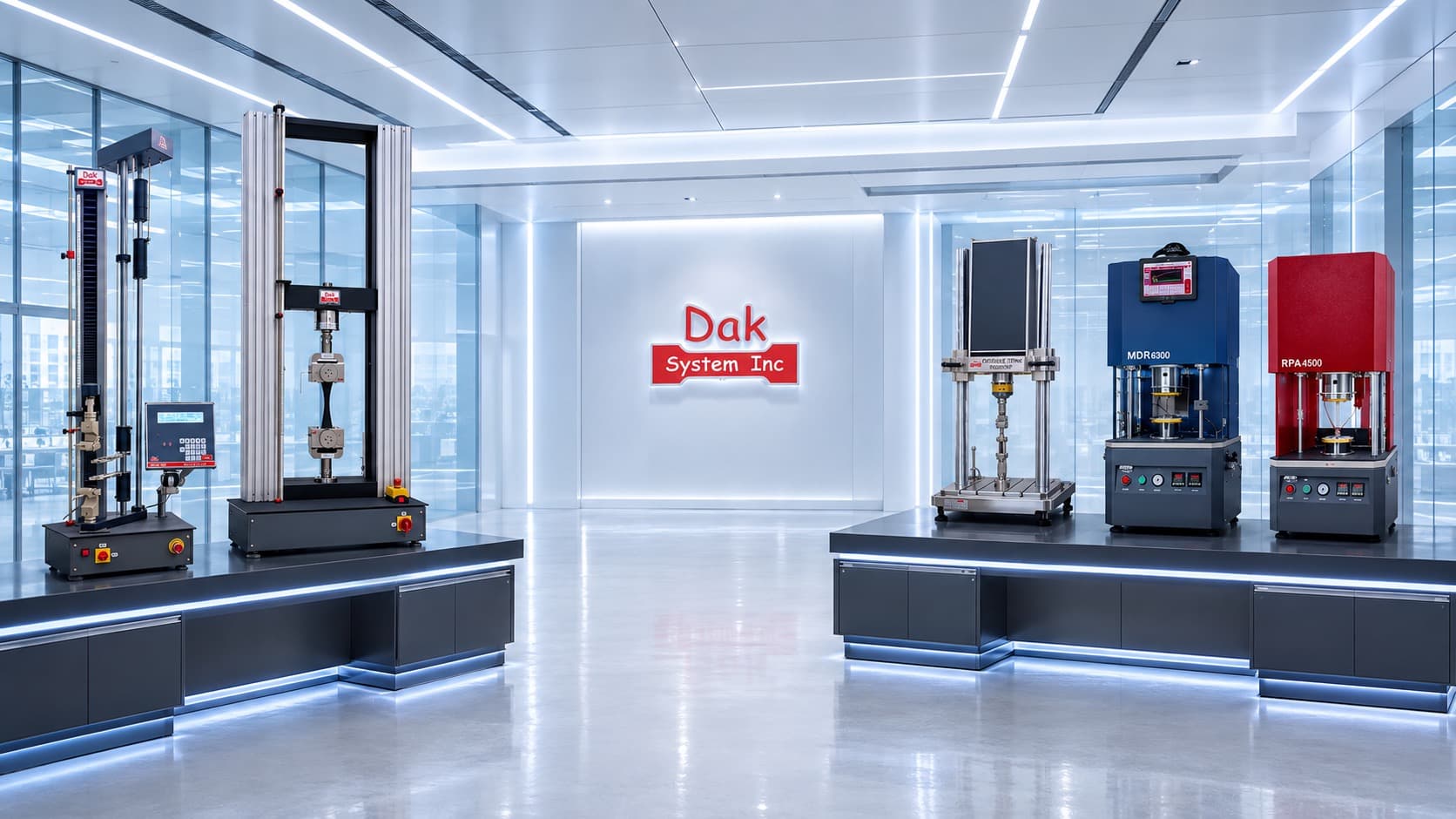
Tell us what you need to test.
Send us the material and the standard it has to satisfy. Our engineers will specify the frame, the load cell and the fixturing.
The MDR answers how a compound cures. If you also need to know how it processes before cure and how it behaves after — across strain, frequency and temperature, on one specimen — that is the Rubber Process Analyser.